
Connecting Gypsy Families Across the World
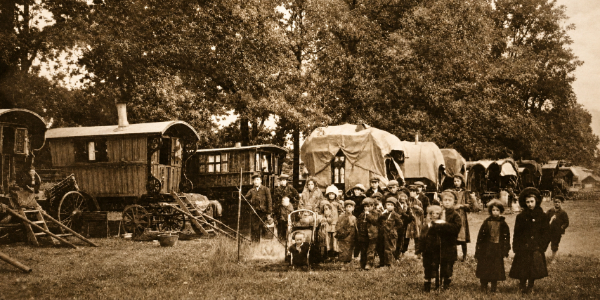
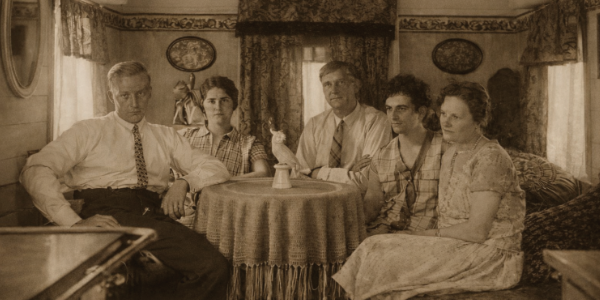

The Gypsy Connection was created to preserve, celebrate, and protect Romani family history while supporting individuals researching their Romani ancestry. Our mission is to provide reliable genealogical resources, historical information, and practical research guidance for those exploring Romani heritage in the United States and around the world.
Whether you are just beginning your family history journey or are an experienced researcher, this website offers a welcoming environment to discover ancestors, document family connections, share knowledge, and learn about the lives and experiences of past generations. Our collection continues to grow and includes thousands of historical records, photographs, books, articles, journals, and other research materials, along with a database containing more than 13,000 documented Romani ancestors. Together, these resources help preserve our shared heritage for future generations.
To protect the integrity of our research and the privacy of individuals represented in our records, registration is required before accessing website content and the ancestor database. Creating an account allows us to responsibly manage historical and genealogical information while ensuring that these resources are used for educational and research purposes.
To request access, simply click "New Account Request" at the top of the page.
The Gypsy Connection consists of two primary sections available to registered members. Because this is an ongoing research project, new information is added daily. As additional records become available, supporting materials, including photographs, public records, historical documents, and other sources, are continually incorporated into individual ancestor profiles. We welcome any additional additions you could provide!
Part 1: Ancestor Database
Select "Search" from the navigation menu to access the ancestor database. To protect privacy, information about living individuals is never displayed
and is accessible only to the website's administrative team.
Part 2: Site Pages
The "Site Pages" section contains a wide variety of educational and research resources, including genealogy guides, historical information, research
articles, useful reference links, current projects, and additional materials related to Romani history, culture, and family research.
 The Gypsy Connection - Main Group
The Gypsy Connection - Sinti Roma
 The Sinti are a Romani subgroup primarily found in Germany, France, and surrounding Central European regions, with a centuries long presence in the area and a distinct cultural and linguistic identity within the broader Romani people.
 The Romanichal are a Romani subgroup native to England and parts of Wales, whose ancestors arrived in Britain in the 16th century and who developed a distinct Anglo-Romani culture, dialect, and traveling traditions separate from other Romani groups.
 The Gitanos are a Romani subgroup native to Spain (and parts of southern France), whose ancestors arrived on the Iberian Peninsula in the 15th century and who developed a distinct Spanish Romani culture, language influence (Caló), and deep ties to Andalusian traditions such as flamenco.
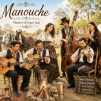 The Manouche (also known as French Sinti) are a Romani subgroup primarily found in France and parts of Belgium and western Germany, with roots in Central European Sinti migration, known for their distinct dialect, traveling traditions, and cultural contributions such as the development of Gypsy jazz.
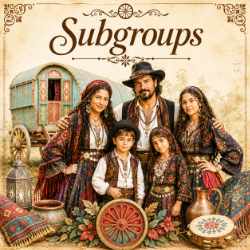
The Romani people are a diverse, traditionally itinerant ethnic group whose distant origins trace to northern India around a thousand years ago, based on linguistic and genetic evidence. Over centuries, Romani communities migrated westward through the Middle East into Europe, where they developed distinct regional subgroups shaped by local languages, religions, and customs. Today, Romani populations are found throughout Europe, the Americas, and beyond, forming one of the largest ethnic minorities in Europe. Despite regional differences, many Romani groups share cultural traditions centered on extended family networks, music, craftsmanship, oral history, and a strong sense of communal identity.
Throughout history, the Romani have faced widespread discrimination, exclusion, and persecution, including enslavement in parts of Eastern Europe for centuries and genocide during World War II. These experiences deeply affected Romani communities and contributed to ongoing social and economic challenges. At the same time, Romani culture has had significant influence on European art and music—most famously in flamenco in Spain and Romani jazz in France—and continues to adapt and thrive while preserving important traditions, languages, and identities across generations.
 The Kaale (Kale) are a Romani subgroup found primarily in Finland and Sweden (Finnish Kaale) and in Wales (Welsh Kale), who developed distinct cultural identities shaped by local language and customs while maintaining Romani heritage and traditions.
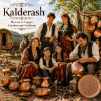 The Kalderash are a Romani subgroup originating in the Balkans—particularly Romania—whose name comes from their traditional occupation as coppersmiths, and who later migrated widely across Europe and the Americas while maintaining a strong Vlax Romani linguistic and cultural identity.
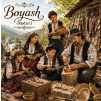 The Boyash (Also called Rudari) are a Romani-related subgroup primarily found in Romania, Hungary, the Balkans, and parts of Central Europe, traditionally known for woodcraft and gold washing, and distinguished by speaking archaic Romanian dialects rather than Romani.
 Gurbeti, Lovari, Romanlar, Ursari, and Xoraxai are some of the subgroups rooted in the Balkans, Central Europe, parts of Turkey and across th world, each shaped by regional history, language, religion, and traditional occupations.
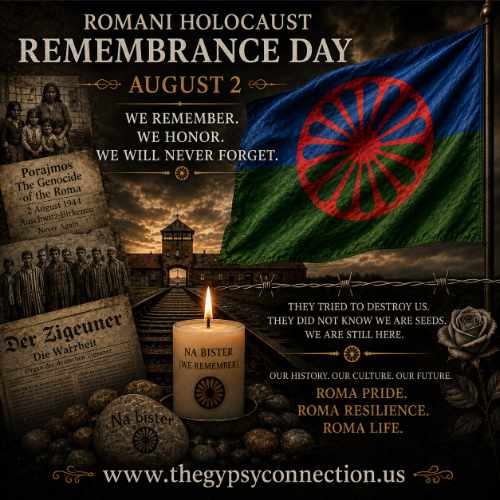
Romani Holocaust Remembrance Day, observed each year on August 2, honors the memory of the hundreds of thousands of Roma and Sinti who were persecuted and murdered by the Nazi regime and its collaborators during the Holocaust. Beginning in the 1930s, Romani families were subjected to racial classification, forced registration, loss of civil rights, imprisonment, deportation, and forced labor. Across Nazi-occupied Europe, Roma and Sinti were sent to ghettos, concentration camps, and extermination camps, including Auschwitz-Birkenau, where a special "Gypsy Family Camp" (Zigeunerlager) was established. Many others were murdered in mass shootings throughout Eastern Europe.
The genocide of the Romani people, known as the Porajmos ("the Devouring") or Samudaripen ("mass killing"), claimed an estimated 220,000 to 500,000 lives, with some historians believing the true number may have been even higher. On the night of August 2–3, 1944, nearly 4,000 remaining Roma and Sinti prisoners in the Auschwitz "Gypsy Family Camp" were murdered, making August 2 the internationally recognized day of remembrance. For decades, the suffering of the Romani people received little official recognition, but today this day serves to honor the victims and survivors, educate future generations, and reaffirm our commitment that hatred, discrimination, and genocide must never be forgotten or repeated.

We are Romani descendants dedicated to preserving, organizing, and sharing reliable information about our people, history, and heritage. Recognizing how scattered and often misunderstood Romani history can be, we created this space to serve as a central location for collective data—bringing together historical records, cultural information, educational resources, and community knowledge in one accessible place.
Our goal is to support research, encourage learning, and strengthen connections across the Romani diaspora and beyond. By preserving documentation, promoting accurate representation, and fostering respectful dialogue, we hope to contribute to a clearer understanding of Romani identity while honoring the generations who came before us.
If you notice any errors or discrepancies on our website, we kindly ask you contact us. We are committed to maintaining the highest level of accuracy and are continuously working to improve our content. Your feedback is greatly appreciated and helps us ensure we provide the most reliable information possible.